
August 11, 2026
Anchor Scripture — Ephesians 4:31–32 (KJV)
“Let all bitterness, and wrath, and anger, and clamour, and evil speaking, be put away from you, with all malice:
And be ye kind one to another, tenderhearted, forgiving one another, even as God for Christ’s sake hath forgiven you.”
Yesterday can be a terrible driver.
It knows every road back to the hurt.
It knows every turn that leads to bitterness.
It knows exactly where the old memories are buried.
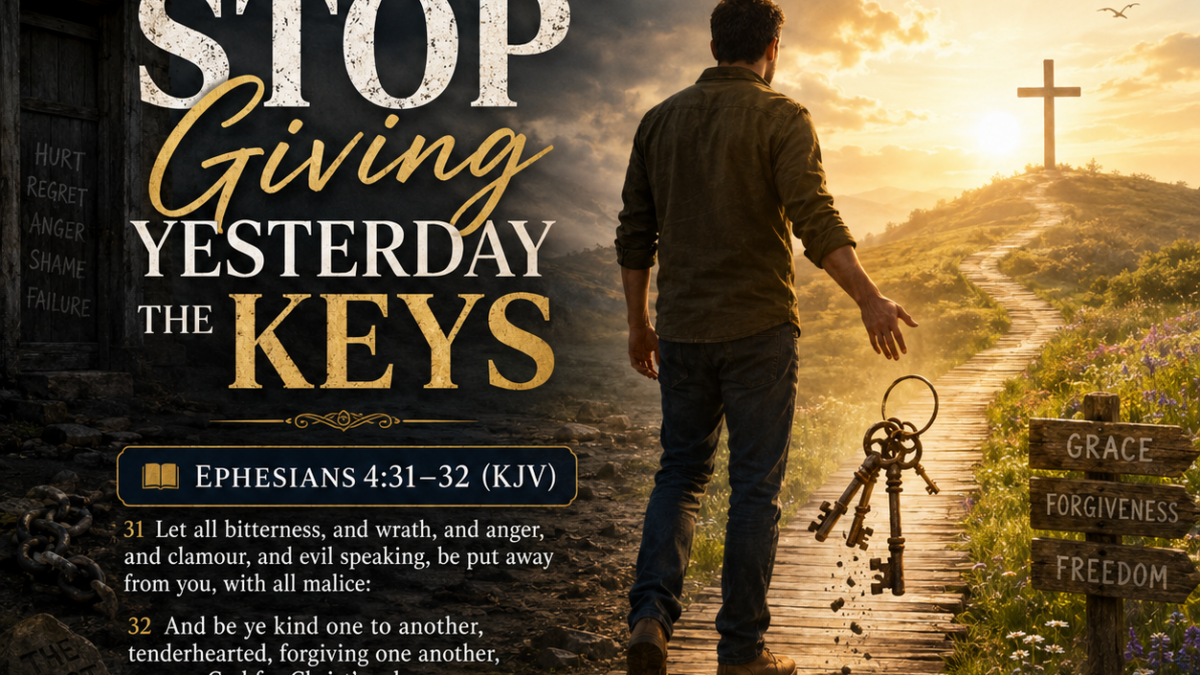
And if we are not careful, we will hand yesterday the keys and let it drive us straight into today.
Some of us are still carrying things that happened when we were children.
Words spoken by a parent.
Neglect.
Abuse.
Rejection.
A home that never felt safe.
Others are carrying wounds that came later in life.
A marriage that ended.
A friend who betrayed us.
A family member who wounded us deeply.
Someone who walked away.
Someone who died before the conversation could ever happen.
Someone who is still alive but no longer within our reach.
And somewhere along the way, the hurt stopped being something that happened to us and started becoming something that traveled with us.
Paul said,
“Let all bitterness, and wrath, and anger… be put away from you.”
That is not a quiet suggestion.
That is a call to release what has been poisoning the heart.
Because bitterness does not stay in the past.
Bitterness leaks.
It leaks into marriages.
It leaks into friendships.
It leaks into the way we trust people.
It leaks into the way we speak.
It leaks into the way we see life.
Sometimes we think we are protecting ourselves when we are really letting an old wound make decisions for us.
You cannot change yesterday. But you do not have to give yesterday permission to keep hurting you today.
Forgiveness is difficult because the pain was real.
And let us be clear about something.
Forgiveness does not mean what happened was acceptable.
It does not call wrong right.
It does not erase consequences.
It does not automatically restore trust.
It does not mean you have to return to a harmful relationship.
But forgiveness does mean that you stop allowing the offense to own space in your heart that belongs to God.
There are times when we can sit across from someone and say, “I forgive you.”
There are other times when that moment will never come.
The person may have passed away.
They may have disappeared from your life.
They may refuse to acknowledge what they did.
They may never apologize.
They may never even understand how deeply they hurt you.
And if your freedom depends upon their apology, then they are still holding the keys.
Hear that again.
If your freedom depends upon someone else finally saying the words you have waited years to hear, then yesterday is still driving.
Forgiveness can begin even when the other person is not in the room.
It can begin when you kneel before God and say,
“Lord, You know what happened. You know what it did to me. You know the anger I have carried. You know the questions that were never answered. I cannot change what happened, but I do not want to carry it any longer.”
That is not weakness.
That is not pretending.
That is surrender.
Paul did not stop with telling us what to put away.
He said,
“And be ye kind one to another, tenderhearted, forgiving one another, even as God for Christ’s sake hath forgiven you.”
That last part changes everything.
We forgive because we ourselves have been forgiven.
Not because the other person earned it.
Not because the hurt was small.
Not because justice does not matter.
We forgive because Christ has shown us what mercy looks like.
And sometimes forgiveness is not one dramatic moment.
Sometimes it is a decision we make again tomorrow.
The memory comes back.
The anger rises again.
The old conversation starts playing in our mind.
And once again we say,
“Lord, I gave this to You. I am not taking the keys back.”
Stop giving yesterday the keys.
Yesterday has driven long enough.
Let Christ lead today.
Reflection
Who still has too much influence over your heart because of something they did years ago?
Is there someone you are still waiting on for an apology, an explanation, or a conversation that may never come?
Has an old wound been affecting the way you trust, love, speak, or respond to people who had nothing to do with what happened?
Pathway Step
Today, name the hurt before God.
Do not soften it.
Do not excuse it.
Tell Him exactly what happened and exactly what it has done inside of you.
Then pray this simple surrender:
“Lord, I release this person and this hurt into Your hands. I will not let yesterday keep driving my life. Teach me how to forgive as You have forgiven me.”
If the hurt is deep enough that you cannot walk through it alone, reach out to a trusted Christian, pastor, counselor, or mature believer who can walk beside you.
Prayer
Heavenly Father,
You know the wounds I have carried.
You know the names, the faces, the words, and the memories.
You know which hurts are still close to the surface and which ones I have buried so deeply that I hardly speak of them anymore.
Today I ask You to help me release what I cannot change.
Take the bitterness.
Take the anger.
Take the unanswered questions.
Take the pain of the apology that never came.
Teach me to forgive, not because the hurt was small, but because Your grace is greater.
Help me stop giving yesterday the keys to today.
Lead me forward in Christ.
In Jesus’ name,
Amen.
Looking Ahead
Tomorrow we will look at what happens after we begin to release the past—because forgiveness is not the end of healing. It is often where healing finally begins.
Closing Encouragement
You may never receive the apology.
You may never get the explanation.
You may never have the conversation.
But you can still be free.
Yesterday does not get to decide who you become today.
Give the keys back to Christ and keep walking forward.